
Many people grew up learning to light a fire the traditional way: placing some logs at the bottom of the firebox, stuffing paper or firelighters beneath, and igniting it from the base. While this approach is familiar, it is not the most efficient or environmentally friendly method. A far better technique is the “top-down” or “Swiss method,” where logs are stacked in layers from large to small and the fire is lit from the top. This technique produces faster heat, reduces smoke and soot, improves ventilation, and helps each piece of firewood burn more effectively.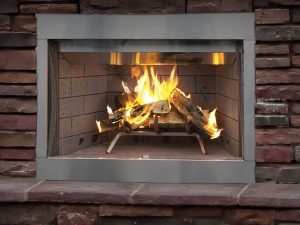
The method is simple. Start with two large logs at the bottom of the firebox, leaving a small gap between them. Place medium-sized logs across the base, again leaving slight spaces for airflow. On top of these, add layers of kindling. Finish the stack with a few firelighters placed above the kindling. When lit from the top, the flames travel downward, heating the larger logs while ensuring the gases released in the process are burned cleanly. This results in less particle pollution, better draft in the chimney, and a quicker path to the stove’s optimal operating temperature.
Air supply plays a key role in successful ignition. Most modern fireplaces and stoves have two air vents: one for primary air to ignite the fire and another for secondary air to sustain combustion. At the start, both vents should be fully open. Leaving the door slightly ajar can also help until the fire is established. Once the flames are burning strongly, usually within 10 to 20 minutes, the primary air can be reduced or closed, depending on chimney draft, while the secondary air should remain partly open to keep the fire efficient and clean. Homes with strong extractor fans may need additional air supply to ensure the stove receives enough oxygen for combustion.
Another common mistake is overloading the stove. Filling the firebox too full slows ignition and lowers temperature, which increases soot production and reduces efficiency. A good rule of thumb is to load only about one-quarter of the firebox’s volume. This ensures the combustion zone reaches high enough temperatures to burn away gases and particulates completely, while also keeping the stove glass cleaner. If soot does appear on the glass, it is often a sign that fires are being lit too cautiously or at too low a temperature.
The quality of firewood also makes a significant difference. Only dry wood should be used, as damp logs burn poorly and waste energy evaporating moisture instead of producing heat. Dry wood creates stronger flames, more warmth, and cleaner combustion. Investing in properly seasoned firewood not only keeps your home warmer but also helps extend the life of your stove by reducing buildup inside the chimney.
Modern clean-burning stoves make the most of these practices. With advanced combustion technology, they can produce nearly double the heat from the same amount of firewood compared to older models, while cutting particle emissions dramatically. In fact, replacing older stoves with clean-burning designs could reduce emissions by up to 80%. For homeowners, this means lower heating costs, fewer chimney cleanings, and the peace of mind that comes from using an energy-smart, environmentally friendly solution.
By choosing efficient techniques like the top-down method, using properly dried wood, and relying on modern clean-burning technology, you not only enjoy the comfort of a glowing fire but also contribute to a more sustainable way of heating your home. A well-lit fire can be both cozy and responsible, turning every evening by the stove into an experience of warmth and care for the environment.
