
New Orleans: (504) 482-7143 | Mandeville: (985) 893-2400
Foster-Taylor Fireplaces
  • Link to Facebook
  • Link to X
  • Link to Instagram
  • Link to Pinterest
  • Link to Tumblr
  • Home
  • Manufacturers
  • Products
    • FIREPLACES
      • Woodburning
      • Gas
        • Vent-Free
        • B-Vent
        • Direct-Vent
      • Electric
      • Outdoor Products
      • Ethanol
      • Isokern Fireplace Systems
      • All Masonry Fireplaces
    • GAS LOGS & ALTERNATIVES
      • Vented
      • Vent Free
      • Alternatives
    • CAST STONE MANTELS
  • About Us
    • Our History
    • Services
    • Our Team
  • Locations
    • Northshore Showroom
    • Southshore Showroom
  • Galleries
    • FIREPLACES
      • Woodburning Fireplaces
      • Gas Fireplaces
        • Vent-Free Fireplaces
        • B-Vent Fireplaces
        • Direct-Vent Fireplaces
      • Electric Fireplaces
      • Outdoor Fireplaces
      • Ethanol Fireplaces
      • Isokern Fireplaces
    • GAS LOGS & ALTERNATIVES
      • Vented Logs
      • Vent-Free Logs
      • Gas Log Alternatives
    • CAST STONE MANTELS
      • Siteworks Chateau
      • Siteworks Estate
      • Siteworks Villa
  • Get a Quote
  • Click to open the search input field Click to open the search input field Search
  • Menu Menu
  • Home
  • Manufacturers
  • Products
    • FIREPLACES
      • Woodburning
      • Gas
        • Vent-Free
        • B-Vent
        • Direct-Vent
      • Electric
      • Outdoor Products
      • Ethanol
      • Isokern Fireplace Systems
      • All Masonry Fireplaces
    • GAS LOGS & ALTERNATIVES
      • Vented
      • Vent Free
      • Alternatives
    • CAST STONE MANTELS
  • About Us
    • Our History
    • Services
    • Our Team
  • Locations
    • Northshore Showroom
    • Southshore Showroom
  • Galleries
    • FIREPLACES
      • Woodburning Fireplaces
      • Gas Fireplaces
        • Vent-Free Fireplaces
        • B-Vent Fireplaces
        • Direct-Vent Fireplaces
      • Electric Fireplaces
      • Outdoor Fireplaces
      • Ethanol Fireplaces
      • Isokern Fireplaces
    • GAS LOGS & ALTERNATIVES
      • Vented Logs
      • Vent-Free Logs
      • Gas Log Alternatives
    • CAST STONE MANTELS
      • Siteworks Chateau
      • Siteworks Estate
      • Siteworks Villa
  • Get a Quote
Local News

How the Yule Log Went from Sacred Fire to TV Comfort

When the holidays roll in and the air turns sharp, most of us instinctively reach for warmth: thick scarves, wool mittens, steaming mugs of cocoa, and if we’re lucky, a fire crackling in the hearth. Few symbols capture that winter coziness as completely as the yule log. Once a massive, sacred hunk of wood at the center of seasonal ritual, the yule log has since splintered into new forms—a dessert on the table, a looping video on the television, and a nostalgic idea of comfort that somehow survived long after the original practice faded from most homes.
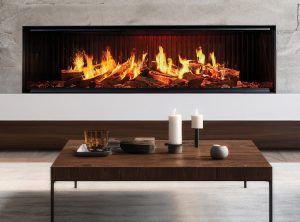
The story of the yule log begins long before Christmas as we know it. The very word “yule” comes from Old English and refers to a midwinter festival held in December and January, celebrated across northern Europe by pagan cultures such as the Vikings. During the Festival of Yule, families would head into the forest in search of a strong, hearty oak. This wasn’t a quick errand; it was a shared ritual. Parents and children together chose the largest, most impressive log they could find and dragged it home, where it would be burned in honor of various gods and as a gesture of gratitude for life and prosperity in the darkest time of year. Fire here was not just heat and light; it was a spiritual anchor and a symbol of continuity.

Over time, layers of superstition settled around the yule log. In some European traditions, the log’s behavior was thought to reveal a family’s fortune. One belief held that the log needed to ignite on the first attempt; if it refused to catch, bad luck was said to hang over the household in the coming year. In other customs, the yule log was never completely consumed. A fragment was saved and kept for the following winter’s ceremony, creating a living chain of luck from year to year and generation to generation. Ashes from the log might be stored under the bed to guard against evil spirits or even protect the house from lightning strikes. The log, in other words, wasn’t just fuel—it was a charm, a protector, and a tangible link between the family and forces they couldn’t control.

As Christianity spread through Europe, older traditions were absorbed and reshaped rather than erased. In England, the yule log became tied directly to Christmas. A great oak would be cut on Christmas Eve, and it had to be big enough to burn for all twelve days of Christmas. While the log burned, families were expected to rest from labor and devote themselves to feasting and celebration. Bringing the log home was a communal event; relatives and neighbors would haul it together with laughter and ceremony, knowing it would quite literally fuel their holiday. The hearth, already the emotional center of the home, became the stage where this massive log slowly turned from wood to embers as the twelve days passed.

Modern heating systems and smaller living spaces eventually made those enormous logs impractical. As fireplaces shrank or disappeared altogether, the traditional yule log became more of a memory than a practice. But traditions rarely vanish cleanly; they adapt. One of the most charming reinventions of the yule log emerged not from a forest or a chapel, but from a bakery. In France, the yule log reappeared as a dessert: the bûche de Noël. This cake is typically a light sponge rolled around a filling, then frosted and decorated to resemble a wooden log, complete with “bark” texture, meringue mushrooms, and powdered sugar “snow.” Popular flavors include chocolate, chestnut, and gingerbread. The story goes that as French families moved into homes without large hearths—or with no fireplace at all—bakers created the edible log so the symbolism of the yule tradition could live on at the holiday table. Where an actual log warmed the room, its dessert descendant warms the gathering.

While French families could satisfy their nostalgia with cake, urban Americans needed a different workaround. In high-density cities like New York, where apartments are small and fireplaces rare, the romantic vision of a Christmas fire was mostly out of reach by the mid-20th century. In 1966, Fred Thrower, a programming director at New York station WPIX-TV, came up with an idea that was equal parts simple and brilliant. If his audience didn’t have real fireplaces, he would bring one to them—through their television screens. WPIX filmed a fireplace with a yule log blazing away and broadcast the footage in a continuous loop on Christmas Eve, accompanied by Christmas music. There was no plot, no dialogue, no host. Just flames, crackling wood, and carols.

What could have been a novelty gimmick turned into something deeply beloved. For New Yorkers who lived in cramped walk-ups and modern high-rises, the televised yule log delivered at least the illusion of a hearth: a soft, shifting light in the corner of the room, crackles mingling with conversation, a backdrop for gift opening and lazy Christmas mornings. The broadcast quickly became a local tradition, and over time it found new life on national cable and, later, in high definition. By the early 2000s, the WPIX Yule Log and its imitators had quietly become part of the seasonal media landscape, as familiar as holiday specials and classic movies.

In the streaming era, the yule log has multiplied endlessly. Today, around the holidays, cable channels, streaming platforms, and even video game consoles offer countless variations: wood-burning hearths, gas fireplaces, rustic cabins, mountain lodges, fireplaces with pets napping nearby, logs accompanied by jazz, classical, or lo-fi beats. With a few clicks, anyone can conjure a virtual fire on their television, laptop, or phone. The flames are pixels instead of embers, but the emotional function is similar. The image of a burning log has become shorthand for warmth, stillness, and togetherness—even if the actual heat comes from a radiator or a forced-air vent.

The yule log’s journey from pagan ritual to dessert plate to television loop says a lot about how traditions survive. As our homes change, our technologies advance, and our beliefs evolve, the core human desire underneath these rituals stays surprisingly constant. We still crave warmth in winter, beauty in darkness, and a shared focal point that gathers people close. The original oak log, dragged from the forest and burned for days, may be rare now. But its descendants are everywhere: in the frosted spiral of a bûche de Noël, in the steady glow of a TV fireplace, and in the way we instinctively cluster around any source of light and warmth when the nights grow long.
Click Here For the Source of the Information.

November 19, 2025
https://fostertaylor.com/wp-content/uploads/Foster-Taylor-Stacked-Logo-300x148.jpg 0 0 jgravestayfos https://fostertaylor.com/wp-content/uploads/Foster-Taylor-Stacked-Logo-300x148.jpg jgravestayfos2025-11-19 16:48:422025-11-19 16:48:42How the Yule Log Went from Sacred Fire to TV Comfort
Local News

$50 Million Wellness Hub Aims to Turn Canal Street Eyesore into BioDistrict Anchor

For decades, the hulking, graffiti-covered building at 2025 Canal Street has greeted drivers heading into downtown New Orleans with a blunt message: decay. Once a hotel and later a city office annex, it eventually landed on the city’s infamous “Dirty Dozen” list of blighted properties. Now, a local developer says that same block could soon tell a very different story—one centered on health, fitness, and neighborhood revival.

Developer David Fuselier, whose past work includes converting the historic Our Lady of Lourdes church on Napoleon Avenue into the Josephine on Napoleon venue operated by the Brennan family, has quietly assembled roughly half a city block bounded by Canal, Iberville, South Prieur, and North Johnson streets. At the heart of his $50 million plan is the long-deteriorating structure at 2025 Canal, directly across from University Medical Center and the VA hospital.

“We’ve been working on this for quite some time,” Fuselier said. “This will be a true community health and fitness center—a place that brings people together and offers a whole host of ways to become healthy and active.” Most of the interior demolition and prep work is already done, he added.

The project is being branded as The Health Collective Wellness and Fitness Center, a medical-fitness complex that aims to blend traditional gym amenities with clinical partnerships and wellness services. City officials have long described 2025 Canal as a “gateway” property—its appearance setting the tone for the approach into downtown. If Fuselier’s plan moves forward, one of New Orleans’ most visible symbols of disinvestment could become a flagship for the city’s growing medical corridor.

A project built on layers of incentives

Fuselier’s team has stacked together a mix of redevelopment tools to make the numbers work. The site qualifies for Opportunity Zone benefits, federal and state historic rehabilitation tax credits, a property tax abatement, and a federal New Markets Tax Credit allocation. Taken together, it’s one of the most heavily structured—and potentially transformational—projects proposed along this stretch of Canal in years.

To test the concept, Fuselier brought in Cooper Wellness Strategies, part of the Dallas-based Cooper Aerobics organization founded by Dr. Kenneth H. Cooper, the physician widely known as the “father of aerobics.” The firm completed a feasibility study and helped shape the vision for a family-oriented facility that emphasizes preventive medicine, physical activity, and lifestyle coaching alongside standard fitness offerings.

Cooper’s nonprofit research arm, The Cooper Institute, now based at the Texas Tech University Health Sciences Center campus, has spent decades studying how exercise and lifestyle changes affect long-term health outcomes. Fuselier says that grounding in evidence-based preventive care is exactly what he wants the Canal Street project to reflect.

Initially, the development team hoped to formalize a medical partnership with LCMC Health and held discussions for nearly a year. Fuselier said the health system’s board ultimately decided not to move forward, and he is now speaking with other potential medical collaborators. LCMC did not respond to requests for comment.

From city annex to “Dirty Dozen”

The story of 2025 Canal is a case study in how a major civic asset can slide into deep blight.

The building began life as a hotel before the City of New Orleans acquired it in 1980 through a land swap and converted it into a City Hall annex, meant to relieve overcrowding at the main government complex. Officials acknowledged even then that the structure was in poor condition. By 1990, they were describing its state as “atrocious” and said it needed extensive renovations that the city couldn’t afford.

Roughly 200 city employees continued working there for another decade before the property was finally vacated in 1999. After that, the building slipped rapidly into disrepair. It was sold to developers in 2006, but their plans stalled. In 2010, the state expropriated the building as part of early planning for the new veterans hospital, only to abandon that idea later.

With no active use and no investment, weather damage, vandalism, and neglect piled up, along with a growing stack of code enforcement citations—19 by late 2023. That November, the city formally named 2025 Canal to its “Dirty Dozen” roster of the most egregious blighted sites, cementing its reputation as a symbol of stalled progress.

Plugging into the BioDistrict vision

Fuselier’s timing is no accident. The site sits inside the BioDistrict, a state-designated economic development zone created to spur growth in life sciences, biotechnology, and healthcare across downtown and Mid-City. The district’s long-term plan calls for a dense ecosystem of research institutions, startups, and health-related private ventures feeding off the energy of nearby hospitals and universities.

“The exciting plans for 2025 Canal Street are exactly what we hope to see in the BioDistrict—the transformation of a blighted property into a community amenity that advances health and well-being,” said BioDistrict board chair Andy Kopplin.

Fuselier argues that a medical-fitness complex fits squarely within that mission. By offering accessible fitness programs, preventive health services, and wellness amenities geared toward both neighborhood residents and hospital workers, he believes The Health Collective can help anchor a healthier, more active community around the medical district.

He also sees a clear market gap. Facilities on the North Shore, such as the Pelican Athletic Club in Mandeville—recently purchased by Genesis Health Clubs—already combine gym amenities with therapy and wellness services. Inside the city, there is nothing quite like it. The Canal Street project, he says, would bring that integrated model into the urban core, connecting directly with the thousands of people who work and seek care in the medical corridor each day.

A block in transition

Fuselier isn’t the only property owner with plans for the block. Terrytown anesthesiologist Dr. Narinder Gupta owns six parcels on the same stretch of Canal. Fuselier said he has reached an agreement to buy or lease Gupta’s property at 2021 Canal to fold into the wellness complex, while Gupta is considering an extended-stay hotel on his remaining sites. Gupta did not respond to requests for comment.

If both projects move ahead, the once-derelict block—long defined by broken windows and fading graffiti—could become a cluster of health-related uses and lodging, serving everyone from nearby hospital staff and patients’ families to neighborhood residents.

For now, the most visible change is inside the old building, where demolition and cleanup are largely complete. The next steps—finalizing financing, securing partners, and moving into construction—will determine whether 2025 Canal finally sheds its “Dirty Dozen” reputation.

“Canal Street has long been waiting for this kind of catalytic investment,” Fuselier said. “With everything happening around the medical district, this site deserves to be part of that transformation.”

If it succeeds, the project won’t just change a single building. It could reshape how people experience one of New Orleans’ busiest gateways, swapping a faded reminder of past neglect for a new symbol of health, energy, and renewal.

Click Here For the Source of the Information.

November 19, 2025
https://fostertaylor.com/wp-content/uploads/Foster-Taylor-Stacked-Logo-300x148.jpg 0 0 jgravestayfos https://fostertaylor.com/wp-content/uploads/Foster-Taylor-Stacked-Logo-300x148.jpg jgravestayfos2025-11-19 16:31:482025-11-19 16:31:48$50 Million Wellness Hub Aims to Turn Canal Street Eyesore into BioDistrict Anchor
Local News

A Simple Seasonal Tune-Up for Your Hearth

As temperatures dip and evenings stretch a little longer, the fireplace naturally becomes the heart of the home. Before you strike the first match of the season, give your hearth a quick pre-flight so it’s safe, efficient, and ready to deliver that steady, relaxing heat all fall and winter.

Start with an inspection. If your fireplace has sat idle for a few seasons—or even just since last spring—have a qualified technician look it over. Experienced operators can spot obvious issues in the firebox and surround, but most problems hide in the stack: loose mortar, cracked liners, failing seals, and lingering moisture all tend to show up in the chimney first. A professional assessment now is far cheaper than a mid-season repair later.

Plan on a thorough cleaning. Soot and creosote accumulate in wood-burning flues over time, and heavy buildup can become a fire hazard. An annual service before the burning season is the safest cadence. During a visit, a chimney sweep can also check for cracked clay flue tiles, gaps or separation in steel liners, and any signs of water intrusion that could accelerate damage.

Protect the top of the system as well as the bottom. A well-fitted chimney cap keeps out rain, leaves, and curious wildlife, while reducing downdrafts on blustery days. Many caps include spark arrestors, which help prevent embers from escaping and landing on your roof—an important layer of safety during periods of dry, windy weather.

Confirm that the damper operates smoothly. A functioning damper lets smoke and combustion gases escape and helps you control the burn. For wood fireplaces, make a habit of opening it fully before every fire and closing it once the embers are cold to preserve indoor heat. For vented gas units, local code often requires the damper to be locked in the open position; your gas utility or installer can verify that it’s set correctly and that a chimney-top spark arrestor is in place to keep debris and animals out.

If you’re considering an upgrade, this is an ideal moment to plan it. Modular systems like Earthcore’s Isokern have been trusted for decades for their safety, durability, and design flexibility. Built from pure Icelandic pumice, Isokern fireboxes and high-temperature flues leverage natural insulation to keep surrounding framing cooler and improve combustion efficiency—equally at home with wood or gas. Installed properly, they’re designed to perform for the lifetime of the house, with the low-maintenance reliability homeowners appreciate.

A few thoughtful steps now—inspect, clean, cap, and confirm damper function—will reward you with a season of worry-free fires. Set the stage once, and then settle in with a favorite blanket and the kind of warmth only a well-tuned hearth can provide.

Click Here For the Source of the Information.

October 28, 2025
https://fostertaylor.com/wp-content/uploads/Foster-Taylor-Stacked-Logo-300x148.jpg 0 0 jgravestayfos https://fostertaylor.com/wp-content/uploads/Foster-Taylor-Stacked-Logo-300x148.jpg jgravestayfos2025-10-28 19:30:072025-10-28 19:31:13A Simple Seasonal Tune-Up for Your Hearth
Local News

Why Unvented Gas Log Fireplaces Fit Tight Specs

If your plans call for a traditional hearth but the build won’t accommodate a chimney, a vent-free gas log fireplace can be a smart workaround. These systems deliver the familiar flame presentation and cozy ambiance many homeowners want, without the architectural hurdles that come with running a flue.

At the core, an unvented gas log fireplace is a purpose-built, gas-burning enclosure engineered and tested to operate safely indoors without a chimney. Introduced to the U.S. market in the mid-1990s, vent-free technology recirculates room air across the flame and releases the warmth back into the space. Because there’s no flue carrying heated air outside, nearly all of the fuel’s usable heat stays in the room, which translates into exceptional space-heating efficiency when used as directed.

Other fireplace categories can be great choices depending on your goals, but they behave differently. A vented, open-front wood or gas fireplace relies on draft up the chimney and typically sends a meaningful portion of heat out with the exhaust—wonderful for atmosphere, lighter on delivered heat. Direct-vent gas units use sealed combustion with outside air for both intake and exhaust through a coaxial pipe; they excel at clean burning and design flexibility behind glass, though the heat profile and operating economics vary by model and installation. Vent-free units occupy a distinct niche: fast installation, strong room-side warmth, and a classic log-and-flame look without the need for a flue.

That flue-less design is where vent-free really shines for remodels and tight footprints. Without a vertical chase or roof penetration to plan around, placement options multiply—on interior walls, lower levels, and even in spaces where running a full chimney would be cost-prohibitive or structurally complex. The same logic applies outdoors under covered patios or lanais, where a protected installation can extend shoulder seasons and anchor an entertainment zone.

For projects that demand premium build quality and design range, Isokern’s Vent-Free Series is a go-to. Drawing on decades of masonry-modular engineering, these ventless fireboxes pair durability with adaptability, offering sizes from 36 inches up to a dramatic 72 inches, along with see-through configurations that warm two rooms at once. Whether you’re after a timeless traditional opening or a custom feature wall, the system integrates cleanly into indoor or outdoor plans while maintaining the performance standards Isokern is known for.

If your specification calls for the look and feel of a classic hearth without the constraints of a chimney, a vent-free gas log fireplace belongs on your shortlist. It’s efficient, installation-friendly, and capable of delivering the fireside experience you’re envisioning. And when you want proven components and support from concept to completion, remember the name behind so many successful builds: Isokern—because behind many great fireplaces is an Isokern.

Click Here For the Source of the Information.

October 7, 2025
https://fostertaylor.com/wp-content/uploads/Foster-Taylor-Stacked-Logo-300x148.jpg 0 0 jgravestayfos https://fostertaylor.com/wp-content/uploads/Foster-Taylor-Stacked-Logo-300x148.jpg jgravestayfos2025-10-07 19:22:132025-10-28 19:24:49Why Unvented Gas Log Fireplaces Fit Tight Specs
Local News

Transform Your Backyard into the Ultimate Outdoor Oasis

Read more
September 17, 2025
https://fostertaylor.com/wp-content/uploads/Foster-Taylor-Stacked-Logo-300x148.jpg 0 0 jgravestayfos https://fostertaylor.com/wp-content/uploads/Foster-Taylor-Stacked-Logo-300x148.jpg jgravestayfos2025-09-17 15:30:262025-09-25 15:32:40Transform Your Backyard into the Ultimate Outdoor Oasis
Page 5 of 19«‹34567›»

Recent Posts

  • Isokern Fireplaces: Volcanic Pumice, Design and Benefits
  • How to Measure a Stone Fireplace Surround
  • Stone Fireplace Design: 5 Elements of Timeless Style
  • Fire Pit Table Safety
  • A Buyer’s Guide to Electric Fireplaces

Follow us on Facebook

Foster-Taylor Fireplaces Locations

We Have Two Locations in the Greater New Orleans Area!


Click to View Northshore Location.


Click to View Southshore Location.

Masonry Products Sales

Visit Our Sister Company

For Info About Masonry Products, Supplies & Accessories.

Office Hours & Info

Monday – Friday 7:00am – 4:30pm


New Orleans: (504) 482-7143

Mandeville: (985) 893-2400


[email protected]

© Copyright 2022 - Foster Taylor Fireplaces - Enfold Theme by Kriesi
  • Link to Facebook
  • Link to X
  • Link to Instagram
  • Link to Pinterest
  • Link to Tumblr
Scroll to top Scroll to top Scroll to top
