

Fireplace Mantel Stone: Natural vs. Cast Stone
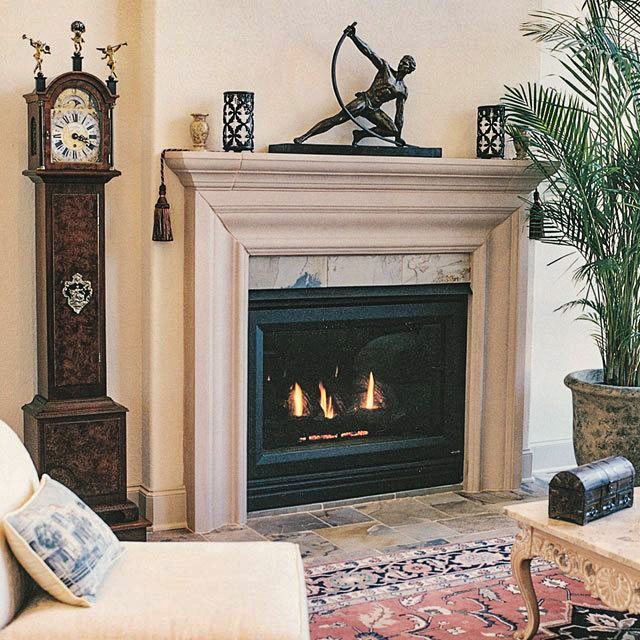
Natural vs. Cast Fireplace Mantel Stone: Key DifferencesA fireplace mantel can serve as a defining architectural feature in a room. The material used for the mantel and fireplace surround affects its appearance, installation requirements, customization options, and overall design. Natural stone and cast stone fireplace mantels are two popular choices. While both can provide a durable, high-end appearance, they differ significantly in how they are made, how they look, and how they are installed.
|
Key Takeaways:
|
What Is a Natural Stone Fireplace Mantel?
Natural stone is quarried directly from the earth and cut or fabricated for use in architectural applications. Common materials include marble, limestone, granite, and travertine.
Because natural stone develops naturally, each piece has its own combination of color, veining, texture, and mineral characteristics. This variation gives natural stone fireplace mantels a distinctive appearance.
Benefits of Natural Stone
Unique appearance: Natural veining, color variations, and mineral patterns make every piece visually distinctive.
Authentic material: Natural stone provides the character and variation associated with quarried stone.
Durability: Many natural stones are highly durable when properly selected, fabricated, installed, and maintained.
Material variety: Homeowners can choose from numerous natural stones, colors, textures, and finishes.
Natural Stone Installation Considerations
Natural stone can be extremely heavy, depending on the type and thickness of the material. Large fireplace surrounds are often fabricated in multiple sections to make transportation and installation more manageable.
Multi-piece construction can create visible seams or joints and requires careful fabrication and installation to achieve proper alignment.
The structural requirements of a natural stone mantel should be evaluated before installation, particularly for large or heavy surrounds.
What Is a Cast Stone Fireplace Mantel?
Cast stone is a manufactured architectural material designed to replicate the appearance of natural-cut stone. It is typically produced using cement materials combined with aggregates and other components, then formed in molds.
Because cast stone is manufactured rather than quarried as a finished architectural piece, it can be molded into specific shapes, profiles, dimensions, and decorative details.
Benefits of Cast Stone
Design flexibility: Cast stone can be molded into custom shapes, profiles, trim, and architectural details.
Consistent appearance: Manufactured production provides greater control over color, texture, and surface characteristics.
Large-format possibilities: Depending on the manufacturer and design, cast stone can be produced in substantial sections, reducing the number of visible joints.
Architectural versatility: It can be used for traditional, transitional, and contemporary fireplace designs.
Reproducible designs: Molds allow architectural details and profiles to be produced with consistent dimensions.
Natural Stone vs. Cast Stone: Key Differences
The primary difference between the two materials is how they are produced.
Natural stone is quarried and fabricated from an existing geological material, so variations in color, veining, and texture are inherent to the stone.
Cast stone is manufactured using a mold, allowing greater control over dimensions, profiles, surface characteristics, and decorative details.
Choosing Between Natural Stone and Cast Stone
Natural stone is well suited to homeowners who value the authentic characteristics and natural variation of quarried stone. It can provide a distinctive, one-of-a-kind appearance, particularly when the veining and color variation are central to the design.
Cast stone is well suited to projects where dimensional consistency, custom profiles, architectural detailing, and large-format designs are priorities. Its molded manufacturing process provides greater control over the final shape and appearance.
Understanding these differences can help homeowners, designers, and builders select the fireplace mantel material that best fits the project’s aesthetic and functional requirements.
Click Here for the Source of the Information.


