

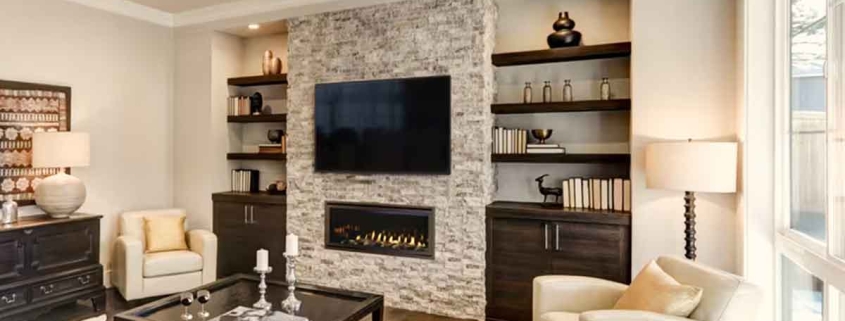
Designing Your Stone Fireplace – Essential ConsiderationsA stone fireplace often serves as the architectural focal point of a living room, great room, or formal interior. Its materials, proportions, detailing, and finish influence the character of the entire space. Whether the goal is a traditional limestone mantel, a classic marble surround, or a clean-lined contemporary design, successful stone fireplace design begins with a cohesive approach to aesthetics, functionality, and construction.
|
Key Takeaways:
|

Five key elements help guide the process: material selection, scale and proportion, symmetry and balance, construction and joints, and color and texture.
Choose the Right Stone Material
Material selection establishes the overall character of a fireplace. Natural stone and cast stone offer different aesthetic qualities, design possibilities, and installation considerations.
Marble:
Recognized for its distinctive veining and refined appearance, marble complements traditional, transitional, and contemporary interiors. Its weight, cost, and maintenance requirements vary by design and stone type.
Limestone:
Known for its understated colors and natural texture, limestone suits a range of styles, from rustic and Mediterranean interiors to more restrained architectural spaces.
Cast stone:
Manufactured from a cementitious mixture designed to replicate the appearance of natural stone, cast stone allows for customized profiles, decorative details, and more consistent finishes.
The right material depends on the desired aesthetic, project budget, dimensions, installation requirements, and maintenance expectations. Structural support and installation methods should be evaluated according to the specific fireplace design and material.
Consider Scale and Proportion
A fireplace should complement the architecture and dimensions of its surroundings. A surround that is too large can overwhelm a room, while one that is too small may lack the visual presence needed to anchor the space.
Important considerations include ceiling height, wall width, firebox dimensions, surrounding architectural features, and the relationship between the mantel and adjacent furnishings.
Projection—the distance a mantel or surround extends from the wall—also affects the finished appearance. A deeper profile may create a more substantial architectural presence, while a shallow profile can suit minimalist interiors.
There is no single ideal dimension for every fireplace. The goal is to create a design that feels intentional, balanced, and appropriate to the room.
Create Symmetry and Visual Balance
Symmetry and balance help a stone fireplace appear cohesive. The relationship between the mantel shelf, vertical supports, inner surround, and firebox contributes to the overall composition.
Traditional fireplace designs often emphasize symmetry, with matching side elements and a centered opening. Contemporary designs may use asymmetry, simplified forms, or contrasting materials while maintaining visual balance.
Proportions should be considered as a complete system rather than as isolated dimensions. The width and height of the surround, the thickness of the mantel shelf, and the size of the inner panels all influence how the finished fireplace is perceived.
Reviewing drawings, material samples, and completed projects can help clarify these relationships before fabrication begins.
Evaluate Seams and Construction Details
Stone fireplace surrounds may be manufactured as a single assembly or as multiple sections, depending on the material, design, dimensions, transportation requirements, and installation conditions.
Joints between sections are an important design consideration. Poor alignment or inconsistent finishing can make seams more noticeable, disrupting the appearance of the surround.
Before selecting a fireplace, ask how its components will be fabricated, transported, joined, and installed. Review the proposed assembly details and clarify how joints will be finished.
Larger or fewer sections may reduce the number of visible joints, but they can introduce additional weight, handling, access, and installation challenges. The best approach balances visual continuity with practical construction requirements.
Coordinate Color, Texture, and Finish
Color and texture influence how a stone fireplace interacts with the rest of an interior. Neutral shades can create a subtle architectural backdrop, while contrasting colors can make the fireplace a stronger focal point.
Finishes also affect the overall impression:
- Smooth or honed finishes create a restrained appearance suited to many contemporary and transitional interiors.
- Polished finishes can emphasize surface detail and create a more reflective, formal effect.
- Antiqued or textured finishes add visual depth and can complement traditional or rustic architecture.
When evaluating finishes, consider flooring, wall colors, cabinetry, furniture, and other materials in the room. Lighting can also change how stone color and surface texture appear throughout the day.
Small samples provide a useful starting point, but larger samples or completed installations offer a better understanding of natural variation and the finished appearance. Confirm how the selected material and finish will look at the intended scale before approving fabrication.
Bringing the Design Together
Successful stone fireplace design combines material selection, appropriate proportions, visual balance, thoughtful construction, and coordinated finishes.
Marble, limestone, and cast stone each offer distinct possibilities, while the dimensions and detailing of the surround determine how well it integrates with the surrounding architecture. Careful planning helps align the aesthetic vision with the practical requirements of fabrication and installation.
Whether designing a traditional mantel or a contemporary fireplace surround, a cohesive approach to these five elements can create a refined architectural feature that complements the space for years to come.
Click Here for the Source of the Information.
