
New Orleans: (504) 482-7143 | Mandeville: (985) 893-2400
Foster-Taylor Fireplaces
  • Link to Facebook
  • Link to X
  • Link to Instagram
  • Link to Pinterest
  • Link to Tumblr
  • Home
  • Manufacturers
  • Products
    • FIREPLACES
      • Woodburning
      • Gas
        • Vent-Free
        • B-Vent
        • Direct-Vent
      • Electric
      • Outdoor Products
      • Ethanol
      • Isokern Fireplace Systems
      • All Masonry Fireplaces
    • GAS LOGS & ALTERNATIVES
      • Vented
      • Vent Free
      • Alternatives
    • CAST STONE MANTELS
  • About Us
    • Our History
    • Services
    • Our Team
  • Locations
    • Northshore Showroom
    • Southshore Showroom
  • Galleries
    • FIREPLACES
      • Woodburning Fireplaces
      • Gas Fireplaces
        • Vent-Free Fireplaces
        • B-Vent Fireplaces
        • Direct-Vent Fireplaces
      • Electric Fireplaces
      • Outdoor Fireplaces
      • Ethanol Fireplaces
      • Isokern Fireplaces
    • GAS LOGS & ALTERNATIVES
      • Vented Logs
      • Vent-Free Logs
      • Gas Log Alternatives
    • CAST STONE MANTELS
      • Siteworks Chateau
      • Siteworks Estate
      • Siteworks Villa
  • Get a Quote
  • Click to open the search input field Click to open the search input field Search
  • Menu Menu
  • Home
  • Manufacturers
  • Products
    • FIREPLACES
      • Woodburning
      • Gas
        • Vent-Free
        • B-Vent
        • Direct-Vent
      • Electric
      • Outdoor Products
      • Ethanol
      • Isokern Fireplace Systems
      • All Masonry Fireplaces
    • GAS LOGS & ALTERNATIVES
      • Vented
      • Vent Free
      • Alternatives
    • CAST STONE MANTELS
  • About Us
    • Our History
    • Services
    • Our Team
  • Locations
    • Northshore Showroom
    • Southshore Showroom
  • Galleries
    • FIREPLACES
      • Woodburning Fireplaces
      • Gas Fireplaces
        • Vent-Free Fireplaces
        • B-Vent Fireplaces
        • Direct-Vent Fireplaces
      • Electric Fireplaces
      • Outdoor Fireplaces
      • Ethanol Fireplaces
      • Isokern Fireplaces
    • GAS LOGS & ALTERNATIVES
      • Vented Logs
      • Vent-Free Logs
      • Gas Log Alternatives
    • CAST STONE MANTELS
      • Siteworks Chateau
      • Siteworks Estate
      • Siteworks Villa
  • Get a Quote
Foster-Taylor Blog

Stone Fireplace Design: 5 Elements of Timeless Style

Planning a custom stone fireplace design? Explore material options, scale, symmetry, construction details, and finishes for a cohesive, lasting design.


Designing Your Stone Fireplace – Essential Considerations

A stone fireplace often serves as the architectural focal point of a living room, great room, or formal interior. Its materials, proportions, detailing, and finish influence the character of the entire space.

Whether the goal is a traditional limestone mantel, a classic marble surround, or a clean-lined contemporary design, successful stone fireplace design begins with a cohesive approach to aesthetics, functionality, and construction.


Discover how stone fireplace surrounds design, elegant materials, balanced proportions, and refined finishes create a timeless focal point for any interior.


Key Takeaways:

  • Choose the right material: Marble, limestone, and cast stone offer distinct appearances, design options, and installation considerations.
  • Balance scale and proportion: Consider room dimensions, ceiling height, firebox size, and mantel depth when developing the design.
  • Maintain visual balance: Coordinate the mantel shelf, surround, inner panels, and firebox to create a cohesive composition.
  • Plan construction details: Understand how fireplace sections, joints, and seams will be fabricated, transported, and installed.
  • Coordinate color and texture: Select a finish that complements the room’s architecture, materials, lighting, and overall design style.
  • Review before fabrication: Evaluate drawings, larger samples, and installation requirements to help align the finished fireplace with the design intent.

Five key elements help guide the process: material selection, scale and proportion, symmetry and balance, construction and joints, and color and texture.

Choose the Right Stone Material

Material selection establishes the overall character of a fireplace. Natural stone and cast stone offer different aesthetic qualities, design possibilities, and installation considerations.

Marble:
Recognized for its distinctive veining and refined appearance, marble complements traditional, transitional, and contemporary interiors. Its weight, cost, and maintenance requirements vary by design and stone type.

Limestone:
Known for its understated colors and natural texture, limestone suits a range of styles, from rustic and Mediterranean interiors to more restrained architectural spaces.

Cast stone:
Manufactured from a cementitious mixture designed to replicate the appearance of natural stone, cast stone allows for customized profiles, decorative details, and more consistent finishes.

The right material depends on the desired aesthetic, project budget, dimensions, installation requirements, and maintenance expectations. Structural support and installation methods should be evaluated according to the specific fireplace design and material.

Consider Scale and Proportion

A fireplace should complement the architecture and dimensions of its surroundings. A surround that is too large can overwhelm a room, while one that is too small may lack the visual presence needed to anchor the space.

Important considerations include ceiling height, wall width, firebox dimensions, surrounding architectural features, and the relationship between the mantel and adjacent furnishings.

Projection—the distance a mantel or surround extends from the wall—also affects the finished appearance. A deeper profile may create a more substantial architectural presence, while a shallow profile can suit minimalist interiors.

There is no single ideal dimension for every fireplace. The goal is to create a design that feels intentional, balanced, and appropriate to the room.

Create Symmetry and Visual Balance

Symmetry and balance help a stone fireplace appear cohesive. The relationship between the mantel shelf, vertical supports, inner surround, and firebox contributes to the overall composition.

Traditional fireplace designs often emphasize symmetry, with matching side elements and a centered opening. Contemporary designs may use asymmetry, simplified forms, or contrasting materials while maintaining visual balance.

Proportions should be considered as a complete system rather than as isolated dimensions. The width and height of the surround, the thickness of the mantel shelf, and the size of the inner panels all influence how the finished fireplace is perceived.

Reviewing drawings, material samples, and completed projects can help clarify these relationships before fabrication begins.

Evaluate Seams and Construction Details

Stone fireplace surrounds may be manufactured as a single assembly or as multiple sections, depending on the material, design, dimensions, transportation requirements, and installation conditions.

Joints between sections are an important design consideration. Poor alignment or inconsistent finishing can make seams more noticeable, disrupting the appearance of the surround.

Before selecting a fireplace, ask how its components will be fabricated, transported, joined, and installed. Review the proposed assembly details and clarify how joints will be finished.

Larger or fewer sections may reduce the number of visible joints, but they can introduce additional weight, handling, access, and installation challenges. The best approach balances visual continuity with practical construction requirements.

Coordinate Color, Texture, and Finish

Color and texture influence how a stone fireplace interacts with the rest of an interior. Neutral shades can create a subtle architectural backdrop, while contrasting colors can make the fireplace a stronger focal point.

Finishes also affect the overall impression:

  • Smooth or honed finishes create a restrained appearance suited to many contemporary and transitional interiors.
  • Polished finishes can emphasize surface detail and create a more reflective, formal effect.
  • Antiqued or textured finishes add visual depth and can complement traditional or rustic architecture.

When evaluating finishes, consider flooring, wall colors, cabinetry, furniture, and other materials in the room. Lighting can also change how stone color and surface texture appear throughout the day.

Small samples provide a useful starting point, but larger samples or completed installations offer a better understanding of natural variation and the finished appearance. Confirm how the selected material and finish will look at the intended scale before approving fabrication.

Bringing the Design Together

Successful stone fireplace design combines material selection, appropriate proportions, visual balance, thoughtful construction, and coordinated finishes.

Marble, limestone, and cast stone each offer distinct possibilities, while the dimensions and detailing of the surround determine how well it integrates with the surrounding architecture. Careful planning helps align the aesthetic vision with the practical requirements of fabrication and installation.

Whether designing a traditional mantel or a contemporary fireplace surround, a cohesive approach to these five elements can create a refined architectural feature that complements the space for years to come.


Click Here for the Source of the Information.


Ready For a Consultation?

This field is for validation purposes and should be left unchanged.
How Did Find Out About Foster-Taylor Fireplaces?(Required)
How Do You Prefer to Be Contacted?
By checking this box, you say that you do not wish to receive this information.
September 10, 2026
https://fostertaylor.com/wp-content/uploads/Heatilator-Direct-Vent-Rave-Fireplaces.jpg 475 1200 admintaylor https://fostertaylor.com/wp-content/uploads/Foster-Taylor-Stacked-Logo-300x148.jpg admintaylor2026-09-10 22:15:352026-10-22 22:39:17Stone Fireplace Design: 5 Elements of Timeless Style
Foster-Taylor Blog

Fire Pit Table Safety

A fire pit table can be used more safely by maintaining clearance from buildings and combustible materials, placing the unit on an approved level surface, avoiding unsafe wind conditions, and supervising children and pets.


Learn Essential Fire Pit Table Safety Tips

Fire pit tables can add warmth and ambiance to an outdoor living space, but safe use requires proper placement, regular maintenance, and supervision. Families with children and pets should take additional precautions to reduce the risk of burns, fire, and gas-related hazards.

This guide covers essential fire pit table safety practices, from choosing a suitable location to maintaining gas components and preparing for emergencies.

Keep your outdoor space safer with practical fire pit table safety advice covering clearances, wind, gas connections, children, pets, and routine maintenance.


Key Takeaways:

  • Choose a safe location: Follow manufacturer clearance requirements and local fire codes. Keep the fire pit away from combustible materials and overhead obstructions.
  • Protect children and pets: Establish a safe boundary and maintain continuous adult supervision whenever the fire pit is operating.
  • Use compatible accessories: Select approved wind guards, burner media, covers, and tank enclosures designed for your specific model.
  • Inspect and maintain regularly: Check gas connections, burner ports, ignition components, hoses, and visible signs of damage before use.
  • Consider weather conditions: Do not operate the fire pit in unsafe winds or when wet, damaged, or obstructed components make operation unsafe.

Choose a Safe Location

Proper placement is one of the most important aspects of fire pit table safety. Heat, flames, and sparks can ignite nearby materials or damage surfaces and structures.

Follow these precautions when positioning an outdoor fire pit table:

Maintain adequate clearance:
Keep the unit away from buildings, fences, overhanging branches, outdoor furniture, and other combustible materials. Follow the manufacturer’s specified clearances and local fire codes.
Avoid overhead obstructions:
Do not operate a fire pit beneath patio umbrellas, awnings, low tree branches, or other materials that could be damaged by heat.
Use an approved surface:
Place the fire pit on a stable, level surface suitable for the unit. Do not assume that a fire-resistant mat makes installation on a combustible deck safe.
Account for wind:
Avoid operating the fire pit during strong or gusty winds. Use a wind guard only if it is approved for the specific model and installed according to the manufacturer’s instructions.
Keep access routes clear:
Position seating and accessories so people can move away from the flame without tripping or coming into contact with hot surfaces.

Before each use, inspect the surrounding area and remove leaves, dry vegetation, packaging, and other combustible debris.

Select Materials and Equipment Carefully

The construction, fuel type, and installation requirements of a fire pit table affect its durability and safe operation.

When evaluating a model, consider the following:

Glass fiber-reinforced concrete:
Often used for durable outdoor enclosures, this material can be heavy and weather-resistant. Its finish may require specific cleaning and sealing products.
Powder-coated aluminum or steel:
These materials are common in outdoor furniture and fire features. Surface temperatures, corrosion resistance, and durability vary by design and finish.
Tempered glass wind guards:
These can help shield a flame from moderate airflow when approved for the unit. They do not make operation in unsafe wind conditions acceptable.
Propane or natural gas systems:
Propane systems generally use a cylinder, while natural gas systems connect to a suitable gas supply. Both require compatible components, proper installation, and routine inspection.

Choose a fire pit table designed for its intended location and fuel source. Review the installation manual, operating instructions, and maintenance requirements before purchasing or using the unit.

Do not modify burners, gas connections, or safety components to accommodate an accessory that is not approved for the model.

Protect Children and Pets

Children and pets may approach a fire pit out of curiosity without recognizing the risk of burns. The table, burner components, glass media, and surrounding surfaces may remain hot after the flame is extinguished.

Reduce these risks by following several precautions:

  • Establish a clear, consistent boundary around the fire pit and teach children to stay outside it.
  • Supervise children and pets continuously whenever the fire pit is operating.
  • Arrange seating to support supervision without obstructing access or escape routes.
  • Keep toys, pet beds, leashes, blankets, and other combustible items away from the unit.
  • Never allow children to operate the ignition system, adjust gas controls, or handle hot accessories.
  • Do not leave a lit fire pit unattended, even briefly.

Furniture placement alone is not a reliable safety barrier. If children or pets cannot be kept at a safe distance, do not operate the fire pit while they are in the area.

Use Fire Pit Accessories Correctly

Accessories can support safe operation when they are compatible with the fire pit and used as directed. They should never replace appropriate placement, supervision, or maintenance.

Consider these common accessories:

Tank enclosures:
Use only enclosures designed for the specific propane system. They must provide the ventilation and access required by the manufacturer. Never seal a propane cylinder inside an unventilated enclosure.

Lids and snuffers:
Use the designated cover or extinguishing accessory for the model. Do not cover a burner with an ordinary lid or place a cover over the unit until the manufacturer’s shutdown and cooling instructions permit it.

Fire glass and other media:
Use only burner media approved for the fire pit. Decorative glass, rocks, and other materials may not withstand the heat or allow the burner to operate correctly.

Wind guards:
Install only compatible guards that meet the manufacturer’s requirements for size, placement, and ventilation.

Fire extinguishers:
Keep an appropriate, accessible fire extinguisher nearby and learn how to use it. If a fire grows, gas is escaping, or the situation becomes unsafe, move away and contact emergency services rather than attempting to extinguish it yourself.

For all accessories, compatibility and correct installation matter more than appearance.

Adjust Maintenance for Seasonal Conditions

Outdoor conditions change throughout the year. Regular inspection helps identify problems before they create a safety hazard.

Summer

Keep umbrellas, shade structures, and fabric furniture outside the manufacturer’s required clearance zone.
Remove spilled food, drinks, and debris after the unit has cooled.
Check that outdoor furnishings and cushions have not shifted too close to the fire pit.

Fall

Remove dry leaves, pine needles, and other combustible debris from the burner area and surrounding surface.
Inspect the unit for damage after periods of heavy use.
Keep seasonal decorations and dried plants away from the flame and hot surfaces.

Winter

Follow the manufacturer’s requirements for operation in cold, wet, or freezing conditions.
Do not operate a unit with wet, damaged, obstructed, or improperly functioning components.
Inspect exposed hoses, regulators, connections, and cylinders for damage or deterioration.
Use a compatible cover for storage, and remove it before operation as directed.

Never wrap gas hoses in improvised insulation or use unapproved heating methods to prevent freezing. Follow the equipment manufacturer’s instructions for cold-weather operation.

Spring

Inspect the burner, ignition system, gas connections, and control components before the first use of the season.
Check for insect nests, spider webs, and debris that may obstruct burner ports or gas pathways.
Clean components only as directed in the manufacturer’s maintenance instructions.
Arrange professional servicing if you notice corrosion, damaged parts, persistent ignition problems, or irregular flames.

Never use a fire pit that has not been inspected after suspected damage or improper storage.

Conclusion: Make Safety Part of Every Use

Safe fire pit table operation begins before the flame is lit. Proper placement, suitable equipment, attentive supervision, and routine maintenance all help reduce preventable risks.

Before every use, check the surrounding area, verify that the equipment is in good condition, confirm that children and pets can remain at a safe distance, and review weather conditions.

These straightforward precautions help make an outdoor fire pit table a more responsible addition to a family patio or backyard.


Click Here for the Source of the Information.


Ready For a Consultation?

This field is for validation purposes and should be left unchanged.
How Did Find Out About Foster-Taylor Fireplaces?(Required)
How Do You Prefer to Be Contacted?
By checking this box, you say that you do not wish to receive this information.
September 2, 2026
https://fostertaylor.com/wp-content/uploads/EcoSmart-Fire-Pit-Table-Manhattan.jpg 598 1500 admintaylor https://fostertaylor.com/wp-content/uploads/Foster-Taylor-Stacked-Logo-300x148.jpg admintaylor2026-09-02 21:21:112026-10-22 22:05:52Fire Pit Table Safety
Foster-Taylor Blog

Interesting Facts to Know About Fire Glass

Learn facts about fire glass, its benefits and uses, fire glass safety considerations, and how to choose the right glass for a gas fire pit or fireplace.


Fire Glass Facts to Know About When Using This Medium for Your Setup

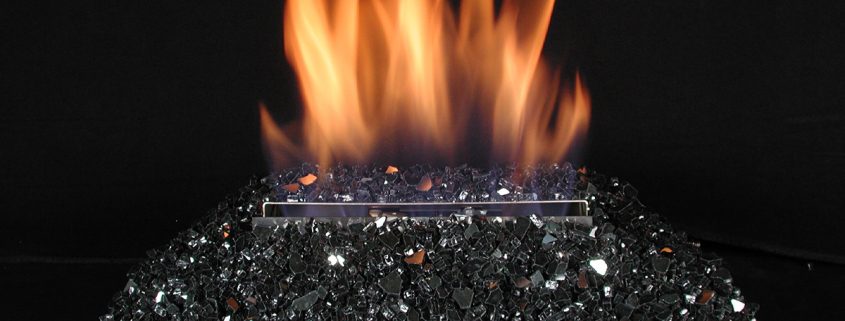
Fire glass is a decorative media designed specifically for use in compatible gas fire pits, fireplaces, fire tables, and fire features. In addition to creating a polished, modern appearance, fire glass allows flames to remain visible while reflecting and enhancing the light from the burner.

Here are important things to know about fire glass, including how it works, where it can be used, and why it is different from ordinary glass.


Key Takeaways:

  • Designed for fire features: Fire glass is specially manufactured for use with compatible gas fire pits, fireplaces, fire tables, and fire pans.
  • Enhances the flame: Glass reflects light from the burner and creates a brighter, more dynamic appearance while keeping the flame visible.
  • Available in multiple styles: Fire glass comes in a wide range of colors, sizes, shapes, and finishes, including reflective options.
  • Decorative versatility: When not exposed to high heat, decorative glass can also be used for landscaping, tabletops, vases, and other design applications.

1. Fire Glass Is Made for High-Heat Applications

Fire glass is manufactured from specially processed glass and is typically tempered, tumbled, and polished to create smooth edges and improve its ability to withstand the heat produced by gas burners.

Unlike ordinary decorative glass, fire glass is specifically intended for compatible fire features. Properly manufactured fire glass will not burn or produce smoke and is available in a variety of colors, finishes, shapes, and sizes.

Although the edges are generally smooth, glass can still break. Handle fire glass carefully during installation, removal, and maintenance.

2. Fire Glass Enhances Light and Flame Visibility

One of the primary functions of fire glass is to enhance the appearance of a gas flame. The glass surrounds the burner and reflects light, creating a brighter, more dynamic fire feature.

Fire glass also allows the flame to remain visible from multiple angles. Unlike traditional logs that can partially obscure the burner, appropriately installed fire glass provides an open media bed around the flame.

While fire glass can absorb and radiate heat, its primary purpose is decorative rather than to increase the heating efficiency of a fire pit or fireplace.

3. Ordinary Glass Should Not Be Used

Not all glass is suitable for use around an open flame.

Standard household glass, laminated glass, glass containing plastic, and other non-rated materials can break, discolor, melt, smoke, or release unwanted fumes when exposed to high temperatures.

Fire glass should only be used when it is specifically manufactured and rated for the intended fire feature. Always follow the fire pit or fireplace manufacturer’s specifications for approved media, glass size, quantity, and installation.

4. Fire Glass Works With Compatible Gas Fire Features

Fire glass is commonly used with natural gas and propane fire pits, fireplaces, fire tables, and gas fire pans.

It can be used to create different visual effects depending on the type of burner, fire feature, and glass selected. Reflective fire glass, for example, produces a more pronounced sparkle and reflection, while non-reflective colors provide a softer appearance.

Before installing fire glass, verify that the burner is designed for decorative glass media. For vent-free applications, use only a burner system specifically approved for that configuration.

5. Fire Glass Has Uses Beyond Fire Features

When it is not being exposed to high heat, decorative fire glass can also be used for a variety of design projects. Depending on the specific product, applications may include landscaping, tabletop décor, vases, aquariums, and other decorative projects.

For fire applications, however, only use glass specifically designed for the heat and burner system involved.

Benefits of Fire Glass

Fire glass combines functional and decorative benefits, making it a popular alternative to traditional fire media.

Choosing the Right Fire Glass

When selecting fire glass, consider the type of gas burner, fire feature, glass size, color, finish, and manufacturer’s requirements. Reflective fire glass can maximize visual sparkle, while colored and non-reflective options can complement a home’s outdoor or interior design.

Most importantly, choose fire glass specifically rated for use in your gas fire feature. Using the wrong type of glass can create safety and performance problems.

Whether the goal is to update an existing fire pit or create a custom fireplace design, fire glass provides a versatile way to enhance the appearance of a compatible gas fire feature while keeping the flame visible and unobstructed.


Click Here for the Source of the Information.

Ready For a Consultation?

This field is for validation purposes and should be left unchanged.
How Did Find Out About Foster-Taylor Fireplaces?(Required)
How Do You Prefer to Be Contacted?
By checking this box, you say that you do not wish to receive this information.
August 12, 2026
https://fostertaylor.com/wp-content/uploads/FT-RASMUSSEN-ALTERNA-Black-Glass.jpg 888 1200 admintaylor https://fostertaylor.com/wp-content/uploads/Foster-Taylor-Stacked-Logo-300x148.jpg admintaylor2026-08-12 01:41:062026-09-17 02:01:53Interesting Facts to Know About Fire Glass
Foster-Taylor Blog

Choosing the Best Fire Pit Fuel: Propane, Natural Gas or Ethanol

Consider propane, natural gas, and ethanol fire pits by heat output, installation, portability, cost considerations, and design to find the best fire pit fuel.


Knowing Your Options When Choosing Fire Pit Fuel

The three most common options for fire pit fuel are propane, natural gas, and ethanol (bioethanol). Choosing the right one depends on factors, such as heat output, installation requirements, portability, operating costs, and design preference.

Each fuel type offers different advantages. Propane provides portability and strong heat, natural gas offers consistent performance and convenient permanent installation, while ethanol is suited to compact fire features and decorative applications.


Key Takeaways:

  • Propane: A flexible option that offers strong heat output without requiring a permanent gas line.
  • Natural gas: Well suited to permanent installations and provides a continuous fuel supply without portable tanks.
  • Ethanol: A compact, clean-burning option primarily suited to ambiance rather than large-scale outdoor heating.
  • Heat output: Propane and natural gas generally provide substantially more heat than ethanol fire pits.
  • Installation: Propane typically requires less infrastructure, while natural gas requires a properly installed gas connection.
  • Portability: Propane and ethanol offer greater flexibility for locations where a permanent natural gas connection is not practical.
  • Design: All three fuel types are available in different styles, but natural gas is particularly suited to permanent built-in fire pit designs.

Propane Fire Pits

Propane fire pits use liquid propane (LP), typically supplied in portable tanks. Because they do not require a permanent gas connection, propane fire pits can be installed in a variety of outdoor spaces and are relatively easy to relocate.

The advantages of propane fuel is that it is portable and flexible, does not require a permanent gas line, has a simple installation, offers a strong heat output and has a wide range of design options.

However, there are factors to consider with propane. Propane tanks require periodic replacement or refilling and can be higher in cost per unit than natural gas. Temperatures affect the performance of propane, which is greatly affected by very cold temperatures, especially when the propane tank pressure drops.

Propane is a practical choice for patios where portability and installation flexibility are important.

Natural Gas Fire Pits

Natural gas fire pits connect to a home’s existing natural gas supply. Once professionally installed, they provide a continuous fuel source without the need for portable tanks.

Natural Gas Advantages:

  • Continuous fuel supply and heat output with not tanks to store or refill / replace
  • Convenient for permanent outdoor installations
  • Well suited for built-in fire pits and outdoor living areas

Even though natural gas can be more expensive as a one-time installation, it is a permanent and reliable source of permanent fuel for an established homesite.

Natural gas is generally suited to permanent patios, outdoor kitchens, and built-in fire pit installations where a gas line is already available or can be installed.

Ethanol Fire Pits

Ethanol, or bioethanol, fire pits use liquid fuel rather than a gas connection. Many ethanol fire pits are compact and designed for tabletop or decorative use.

Ethanol fuels boasts an ease of use because no gas line or propane tank are required, and there are multiple compact installation options available.

Other Advantages of Ethanol Fuel:

  • It is a clean-burning fuel that generally does not produce smoke or soot
  • It is suitable for many modern and minimalist designs
  • It often does not require a chimney or traditional venting system

Factors to Consider with Ethanol Fuel:

  • Generally produces significantly less heat than propane or natural gas fire pits
  • Fuel must be stored and replenished
  • Operating costs can be higher depending on fuel consumption
  • Requires careful handling and safe refueling practices
  • Ethanol fire pits are particularly suited to creating ambiance rather than heating a large outdoor area.

Installation and Maintenance

Installation requirements vary significantly by fuel type.

Propane: Propane fire pits generally require connecting the appliance to a compatible propane tank and checking all connections for leaks. Always follow the manufacturer’s installation instructions and local safety requirements.

Natural Gas: Natural gas fire pits require a properly sized gas connection and should be installed according to local building and fuel-gas codes. Professional installation is recommended when connecting a fire pit to a home’s gas supply.

Ethanol: Ethanol fire pits typically require minimal installation, but safe fuel handling is essential. The unit should be completely extinguished and allowed to cool before refueling. Always follow the manufacturer’s instructions and applicable safety guidance.

Seasonal Performance

Outdoor conditions can affect fire pit performance throughout the year.

Propane and natural gas fire pits generally provide the heat output needed for cool-weather outdoor use. Natural gas offers a continuous supply, while propane provides greater flexibility for locations without a permanent gas connection.

Very cold temperatures can reduce propane tank pressure and affect performance. Natural gas systems are not subject to the same portable-tank pressure issue.

Ethanol fire pits are more sensitive to environmental conditions and generally provide less heat, making them better suited to mild-weather use and decorative applications.

Fire Pit Design and Appearance

Fuel choice can also influence fire pit design.

  • Propane fire pits are available in portable and built-in configurations, including fire tables, bowls, and concrete-style designs. Many models incorporate hidden propane tanks for a cleaner appearance.
  • Natural gas fire pits are particularly suitable for permanent installations and custom outdoor living spaces. They can be incorporated into stone, concrete, or other built-in structures.
  • Ethanol fire pits often feature compact, minimalist designs with glass surrounds and exposed flames. Their lack of a gas connection provides greater flexibility for certain tabletop and freestanding applications.

Fire media such as lava rock, fire glass, and ceramic logs can also be used with many propane and natural gas fire pits, depending on the burner and manufacturer’s specifications.

Overview

The best fire pit fuel depends on how the fire pit will be used.

Choose propane when portability, installation flexibility, and strong heat output are priorities.

Choose natural gas when a permanent installation, continuous fuel supply, and consistent performance are more important.

Choose ethanol when the primary goal is ambiance, a compact design, and a fire feature that does not require a gas connection.

Understanding the differences between propane, natural gas, and ethanol fire pits makes it easier to select a fuel type that matches the space, desired heat output, installation requirements, and overall outdoor living design.


Click Here for the Source of the Information.


Ready For a Consultation?

This field is for validation purposes and should be left unchanged.
How Did Find Out About Foster-Taylor Fireplaces?(Required)
How Do You Prefer to Be Contacted?
By checking this box, you say that you do not wish to receive this information.
August 3, 2026
https://fostertaylor.com/wp-content/uploads/ECOSMART-Nova-600-Fire-Pit-Table-5.jpg 667 1000 admintaylor https://fostertaylor.com/wp-content/uploads/Foster-Taylor-Stacked-Logo-300x148.jpg admintaylor2026-08-03 01:09:362026-09-17 01:41:00Choosing the Best Fire Pit Fuel: Propane, Natural Gas or Ethanol
Foster-Taylor Blog

Comparing Gas Fireplaces – Ventless, Direct Vent & B-Vent

Comparing gas fireplace - consider the differences among ventless, direct vent, and B-vent options to understand their benefits, drawbacks, heating performance, and installation needs.


Helpful Information Comparing Gas Fireplaces

Gas fireplaces overall are a solid choice for a fireplace in your new, custom home or addition build, an upgrade to an existing fireplace installation, or a new install in a room with no fireplace. They offer convenience, safety, and ease-of-use when you can “flip a switch” to turn on the fireplace. When comparing gas fireplaces, there are three main gas fireplace types from which to choose – Ventless, Direct Vent, and B-Vent. Each fireplace has its own unique features, uses, and drawbacks; but all of them have a place in your space depending on your needs.

A ventless fireplace radiates almost 100% heat into a room, can be installed anywhere because it has no chimney and no flue, and is an affordable option for those on a budget. The direct vent fireplace has many benefits including safety (it’s enclosed in glass), an even heating system with a blower to move the heat around the space, and it’s vented, so all air pollutants are pulled out and vented to the outdoors. The b-vent fireplace is less efficient than a vent-free or direct vent, but more efficient than a traditional wood burning fireplace. The b-vent fireplace requires a vertical chimney has offers old school, traditional flames and medium heat. They can be used for traditional fireplace activities, such as roasting marshmallows as well.

Explore ventless, direct vent, and B-vent when comparing gas fireplaces to find the right gas fireplace for your home's heating, installation, safety, and style needs.
 

Key Takeaways:

  • Ventless fireplaces offer high heat output and flexible installation because they do not require a chimney or external vent.
  • Direct vent fireplaces use a sealed glass front and vent combustion gases outdoors, providing a balance of heating performance, safety, and aesthetics.
  • B-vent fireplaces require a chimney or flue and provide a more traditional fireplace appearance with lower heating efficiency.
  • Installation requirements vary significantly between ventless, direct vent, and B-vent systems, so available space and venting options should be considered before choosing.

Ventless Fireplaces

When you are comparing gas fireplaces, the ventless fireplace system is the best for producing heat quickly in the room it’s installed. Speaking of installation, the ventless fireplace can be fitted into any wall, surface, corner, or space that fits the width and height requirements of the fireplace. It provides a kind of instant gratification for the user in that you don’t have to provide a chimney or vented system during the installation.


Because it uses all of its fuel efficiently and doesn’t vent anything to the outside, the ventless fireplace burns almost at 100% capacity, which warms up the room or space very quickly. The drawback of this system is that because nothing is being vented, all exhaust stays in the room. This means that you have to occasionally open a window, turn on a fan, or vent the space in some way to avoid accumulating anything that the fireplace expels during burning. A ventless fireplace is built to safety standards, so you don’t have to worry about too much exposure, but it’s recommended to use a carbon monoxide monitor during use.

Direct Vent Fireplaces

When comparing gas fireplaces, direct vent fireplaces has much to offer in terms of aesthetics, heat, and air quality. There are some constraints on direct vent installation – mainly where it’s installed and the installation requirements. Because direct vent fireplaces have a glass front, the space in which they’re installed requires a front-facing installation. Also, because it has to be vented, if you are constructing it into a wall that previously had no fireplace, venting has to be created either horizontally or vertically to the outside. However, once you have this venting system, you are assured of pristine air quality in the room because the venting is pulling in the outside air.


Unlike the ventless fireplace, a direct vent fireplace outputs about 70% of heat efficiency while it’s burning. A feature that helps with the heating is a controlled blower system which can be turned on and off depending on your heating needs. It’s a consensus that direct vent fireplaces have unbelievably realistic flames in the fireplace display. This aesthetic truly adds to the fireplace and makes it the focal point of any room or space.

B-Vent Fireplaces

The b-vent fireplace is a throwback to the more traditional fireplace setup, which was originally offered as a wood burning fireplace. B-vent fireplaces require a chimney or a flue, have realistic, old school fireplace flames, and are less efficient in their heating because the fireplace is open to the environment and is being vented out of a chimney. there are definitely reminiscent of a regular, wood burning fireplace and can be used to traditions such as roasting marshmallows.


You can install this fireplace with a variety of surrounds, hearths, mantels, and add-ons like a firewood box to create beautiful ambiance. One drawback with a b-vent fireplace is that you will need to be mindful of where the chimney is installed and if it’s covered by a floor-to-ceiling surround. The path of the chimney up the wall can heat up, which can affect an over-the-fireplace installation of a television or work of art. It’s ideal to install a b-vent fireplace outdoors, as the heat has someplace to go, and you can get really creative with the surround and hearth in an outdoor space.

Comparing Gas Fireplaces Overview

So, for immediate and intense heat, choose a ventless fireplace, which also offers flexibility in placement. If you’re looking for a “balanced approach” to a gas fireplace, you can’t go wrong with a direct vent fireplace, which has very decent heat output, flames enclosed behind glass for safety, a blower to evenly heat your room, and air quality produced by outdoor venting. the b-vent fireplace offer nostalgia, ambiance, and an opportunity to emphasize the aesthetic surround of the fireplace as it relates to decorating your space.

Learn more about our gas fireplaces in our gallery section, or visit one of our two showrooms to see each one in person. Contact us today for sizes and pricing!


Click Here for the Source of the Information.


Ready For a Consultation?

This field is for validation purposes and should be left unchanged.
How Did Find Out About Foster-Taylor Fireplaces?(Required)
How Do You Prefer to Be Contacted?
By checking this box, you say that you do not wish to receive this information.
July 15, 2026
https://fostertaylor.com/wp-content/uploads/HEATILATOR-Gas-Direct-Vent-Heirloom-4.jpg 740 1000 admintaylor https://fostertaylor.com/wp-content/uploads/Foster-Taylor-Stacked-Logo-300x148.jpg admintaylor2026-07-15 17:08:272026-08-19 17:59:50Comparing Gas Fireplaces – Ventless, Direct Vent & B-Vent
Page 1 of 18123›»

Recent Posts

  • Isokern Fireplaces: Volcanic Pumice, Design and Benefits
  • How to Measure a Stone Fireplace Surround
  • Stone Fireplace Design: 5 Elements of Timeless Style
  • Fire Pit Table Safety
  • A Buyer’s Guide to Electric Fireplaces

Follow us on Facebook

Foster-Taylor Fireplaces Locations

We Have Two Locations in the Greater New Orleans Area!


Click to View Northshore Location.


Click to View Southshore Location.

Masonry Products Sales

Visit Our Sister Company

For Info About Masonry Products, Supplies & Accessories.

Office Hours & Info

Monday – Friday 7:00am – 4:30pm


New Orleans: (504) 482-7143

Mandeville: (985) 893-2400


[email protected]

© Copyright 2022 - Foster Taylor Fireplaces - Enfold Theme by Kriesi
  • Link to Facebook
  • Link to X
  • Link to Instagram
  • Link to Pinterest
  • Link to Tumblr
Scroll to top Scroll to top Scroll to top
